Dimension
Aerial platform
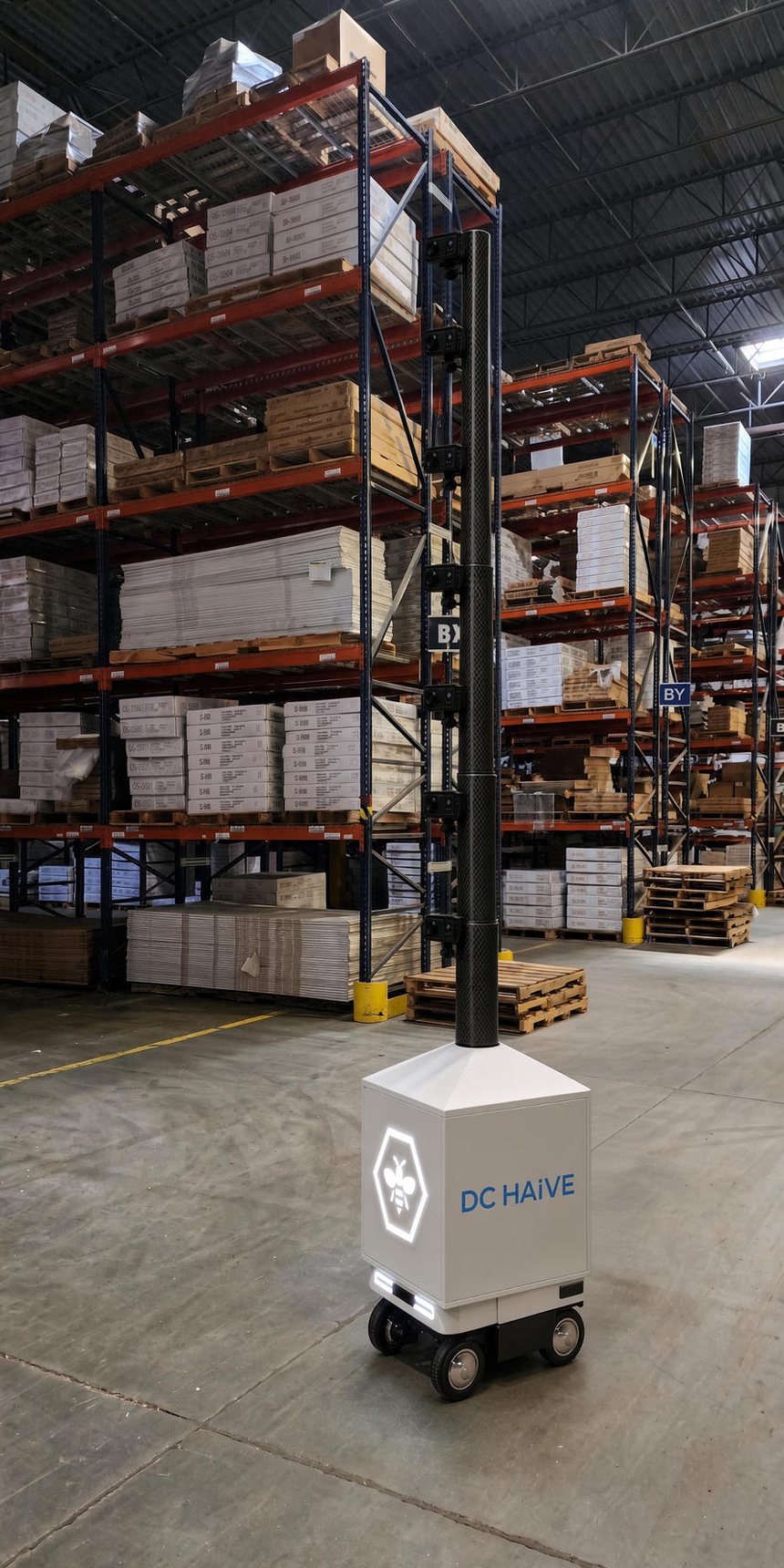
DC HAiVE rover
Infrastructure
Nests, charging pads, electrical work and rack modification are prerequisites.
Operates at floor level and charges from a standard outlet. Zero vertical modification.
Duty cycle
The physics of flight cap operation at 15–30 minutes before recharge.
A heavy-duty battery payload on a ground chassis runs close to a full shift on one charge.
Compute
Payload limits preclude onboard inference, so raw video streams over facility Wi-Fi.
Inference runs on the vehicle. Only lightweight JSON leaves the rover.
Safety
Overhead collision, fall and sprinkler-interference risk, plus a new class of liability.
Vision-based navigation and hardware E-stops at ground level. No airspace hazard.
Operations
Pilots, visual observers, restricted airspace and suspended work nearby.
Navigates standard aisles autonomously. Surrounding work continues.
Image quality
Weight limits constrain optics and preclude dedicated lighting; motion blur is common.
A rigid mast holds 8MP HDR cameras steady and brings its own illumination.
Maintenance
Specialist aerospace vendors, or work at height.
Modular hardware serviced at floor level by internal staff.
Noise
Propeller whine and unpredictable overhead movement can mask audible safety alarms.
Quiet and predictable — it reads as standard warehouse equipment.
An order of magnitude simpler, more reliable and more elegant — because the
design is proportionate to the problem.